
Exploring Residential Properties: Your Guide to Finding the Perfect Home
Residential properties in [your area], with Jersey City as a prime example, combine historic streets, modern towers, and waterfront views in a compact footprint. According to U.S. Census QuickFacts, Jersey City’s population exceeded 292,000 residents in 2023, signaling strong demand for housing across neighborhoods like Paulus Hook, Journal Square, and Hamilton Park. Understanding building styles, amenities, commute options, and school access helps frame decisions, whether the goal involves a compact condo or a townhouse facing Van Vorst Park’s leafy lawns and playgrounds.
What Defines Residential Properties in the Featured Area?
Residential properties in [your area] range from prewar walk-ups near Bergen Avenue to glass-clad towers by the Hudson River Waterfront Walkway. Many mid-rise brick buildings around Grove Street PATH Station feature one- and two-bedroom units between $450,000 and $750,000, based on recent sales tracked by Redfin through early 2026. Townhomes along Montgomery Street and in Paulus Hook frequently incorporate private stoops, small front gardens, and original brownstone facades, attracting residents who prioritize character, block identity, and tree canopy over sheer building height.
High-rise condos near Exchange Place PATH Station and the Newport Centre retail complex usually emphasize security desks, fitness facilities, and river views. According to Zillow, luxury listings above roughly $2.4M in Jersey City cluster along the waterfront and in limited townhome pockets as of Q1 2026. Many of these buildings offer in-unit laundry, deeded garage parking, and on-site package management, features that drastically reduce weekly errands and off-street parking stress.
Co-op style and smaller condominium buildings appear more frequently around Hamilton Park and McGinley Square. These properties often provide shared backyards, bike storage, and sometimes rooftop decks rather than full-service amenities. Maintenance fees for such buildings typically fall between $450 and $900 per month, based on current ranges reported by Zillow. Those recurring costs cover hallway cleaning, common-area utilities, and building insurance, which can simplify annual budgeting compared with fully independent rowhouses on side streets near Kennedy Boulevard.
On a late summer evening along Washington Street in Paulus Hook, the glow from brick townhouses mixes with the soft clink of dishes from Satis Bistro’s outdoor tables. The air carries a blend of roasted garlic, sea breeze from the Hudson River, and faint diesel notes from ferries docking at the nearby Paulus Hook Ferry Terminal. Streetlights reflect off polished brownstone steps, while cyclists glide past low-hanging trees, giving the corridor a calm, luminous atmosphere after the rush-hour surge fades.
How Do Location and Amenities Shape Daily Life in the Featured Area?
Location strongly influences transportation patterns across residential properties in [your area]. According to Walk Score, Jersey City holds a walk score of around 87, transit score near 70, and bike score around 64, indicating highly accessible streets. Buildings within a half-mile of Grove Street PATH Station or the Newark Avenue Pedestrian Plaza generally command pricing premiums because residents can reach Manhattan in roughly 15 to 20 minutes during typical commuting hours.
Amenities inside buildings add another layer of differentiation. Newer towers near Marin Boulevard and the Newport waterfront often advertise fitness centers exceeding 2,000 square feet, children’s playrooms, and shared lounges with skyline views. According to marketing data compiled by Redfin, listings that mention doormen and gyms tend to spend roughly 5 to 10 fewer days on market than comparable units without those amenities. Rooftop terraces and grilling stations further differentiate many mid- and high-rise buildings around the Jersey City Waterfront neighborhood.
Inside a sixth-floor condo facing Hamilton Park, morning sunlight streams through tall windows, casting long, bright rectangles across original hardwood floors. Outside, the gentle rustle of leaves and the distant laughter from the dog run blend with the aroma of freshly ground espresso drifting from Smith & Chang General Goods on Jersey Avenue. The muffled bell of a passing bicycle and the low hum of conversations from the park’s benches create an intimate soundscape that shapes daily routines without overwhelming quiet interior spaces.
Street-level amenities around residential corridors also matter. The stretch of Newark Avenue near the Pedestrian Plaza features restaurants like Porta and Ani Ramen, cafes such as Lackawanna Coffee, and small markets that make weekly errands possible within a few blocks. Proximity to Jersey City Medical Center along Grand Street can influence interest from healthcare workers seeking short commutes. Similarly, access to bike lanes on Grand Street and Marin Boulevard encourages some residents to replace multi-transfer subway rides with quick, predictable pedal commutes between home and office.
What Market Trends Affect Residential Properties in the Featured Area?
Market conditions for residential properties in [your area] have shown sustained strength over recent years. According to Redfin, the median sale price for Jersey City homes has generally ranged between $550,000 and $750,000 from late 2024 through early 2026, depending on neighborhood. Condominiums near Exchange Place typically trade above this range, while some co-ops west of Kennedy Boulevard close below. Inventory often hovers near two to three months, indicating conditions that favor sellers but still provide options for patient buyers.
Pricing tiers vary sharply between waterfront blocks and inland sections like West Side and Greenville. Data from Zillow as of Q1 2026 suggests that homes within a half-mile of the Hudson River may list for 20% to 35% more than comparable properties farther inland. That premium reflects river views, easier access to PATH and ferry terminals, and proximity to office towers at Harborside and Exchange Place. Seasonal swings, especially between March and June, frequently bring multiple-offer situations in these districts.
Rental dynamics also shape ownership decisions. According to research compiled by Zillow, average Jersey City apartment rents in early 2026 generally range between $2,600 and $3,600 per month for one- and two-bedroom units, depending on location and amenities. In buildings where common charges remain modest, ownership monthly costs can rival or undercut these rents over multi-year horizons, especially when fixed-rate mortgages and potential tax deductions enter the calculation.
Financing conditions further influence residential property choices. As of early 2026, typical 30-year fixed mortgage rates have fluctuated between roughly 5.5% and 7%, based on national averages tracked by Freddie Mac. Lower rates can expand budgets enough to shift interest from smaller units in McGinley Square to larger homes closer to Van Vorst Park or the Village neighborhood. Conversely, rate increases sometimes redirect attention toward more affordable condos near Journal Square or Bergen-Lafayette, where emerging retail corridors provide room for long-term growth.
How Do Schools, Parks, and Community Resources Influence Home Choices?
Schools often sit near the top of criteria lists for residential properties in [your area]. According to Niche, the Jersey City Public Schools district receives overall grades in the B range, with standout specialized programs. McNair Academic High School holds a GreatSchools rating around 10/10, while Dr. Michael Conti School (PS 37) near Marin Boulevard also posts strong performance. Proximity to such campuses frequently influences demand for condos and townhomes within favored enrollment zones.
Parks and waterfront spaces contribute significantly to residential appeal. Liberty State Park offers over 1,200 acres of lawns, trails, and marina views across the harbor. The Jersey City Department of Parks lists more than 60 individual parks and playgrounds citywide on its official parks portal. Smaller spaces like Van Vorst Park, Hamilton Park, and Riverview-Fisk Park in the Heights provide dog runs, farmers markets, and shaded seating, improving quality of life for residents in adjacent brownstones and low-rise buildings.
Community resources extend beyond green space and schools. The Jersey City Free Public Library system maintains multiple branches, including the Main Library on Jersey Avenue and the Five Corners Branch near Journal Square. Cultural venues such as White Eagle Hall on Newark Avenue host concerts and events that strengthen neighborhood identity. Health facilities like Jersey City Medical Center and Christ Hospital add reassurance for households that place strong value on nearby emergency care, maternity services, and specialist access.
Neighborhood-level organizations also shape decision-making. Groups supporting the Historic Downtown Special Improvement District and the Hamilton Park Neighborhood Association coordinate events, cleanup initiatives, and advocacy on zoning or traffic issues. Their presence can stabilize property values by keeping commercial corridors active and addressing quality-of-life concerns quickly. According to surveys highlighted by Niche, a majority of residents report satisfaction with access to parks, restaurants, and cultural offerings, which reinforces long-term confidence in residential demand.
What Steps Help Narrow the Search for Residential Properties in the Featured Area?
Sorting among residential properties in [your area] begins with defining unit types and budget ranges. Entry-level condos in neighborhoods like Journal Square, McGinley Square, and Bergen-Lafayette often close between $350,000 and $550,000, based on recent sold data compiled by Redfin. Larger two- and three-bedroom units near the Waterfront, Hamilton Park, and Paulus Hook can extend well beyond $900,000. Establishing clear thresholds for down payment, monthly housing costs, and desired square footage helps filter available listings more efficiently.
Commute mapping frequently guides neighborhood selection. Residents working in Lower Manhattan often target properties within walking distance of Exchange Place or Grove Street PATH Stations to keep total door-to-door times under 30 minutes. Those employed along the New Jersey waterfront may prioritize access to Hudson-Bergen Light Rail stops at Marin Boulevard, Harborside, or West Side Avenue, where regular service reduces reliance on driving. Bike commuters sometimes focus on corridors connected to the Essex Street and Grand Street bike lanes, keeping daily travel predictable even during peak congestion.
Touring strategies matter once a shortlist emerges. Based on general transaction patterns tracked by Redfin, competitively priced homes in downtown Jersey City often attract accepted offers within 7 to 14 days of listing. Scheduling tours quickly, reviewing building financials in advance, and preparing documentation for pre-approval can reduce delays that otherwise weaken negotiating positions. Coordination with experienced local representation familiar with streets like Erie Street, Pavonia Avenue, and Bright Street further improves the ability to evaluate building quality during initial visits.
Longer-term planning should also incorporate anticipated life changes. Households expecting future space needs might favor duplex units or homes with potential for basement finishing near West Side or the Heights, where larger lots appear more frequently. Those prioritizing nightlife and dining may prefer proximity to Newark Avenue, Grove Street, or the emerging restaurant cluster along Communipaw Avenue in Bergen-Lafayette. Balancing current needs with projected five- to ten-year horizons helps avoid repeated moves and transaction costs that can easily exceed 6% to 8% of property value when agent commissions, transfer taxes, and closing fees combine.
The population figure above 292,000 cited at the start of this guide reflects enduring demand pressures on residential properties in [your area], particularly across Jersey City’s transit-rich corridors. That same population scale from the opening underscores why even modest inventory shifts can affect pricing in neighborhoods like Paulus Hook, Hamilton Park, and Journal Square. The New Jersey Multiple Listing Service provides continuously updated data on active, pending, and closed listings across Hudson County. Buyers who register listing alerts through that platform and commit to touring competitively priced properties within 48 hours of activation before the late-spring surge in May typically gain earlier access to strong options. Those who delay similar actions until after June often face thinner choices, higher prices, and more frequent bidding wars for the best-located homes.
FROM OUR BLOG

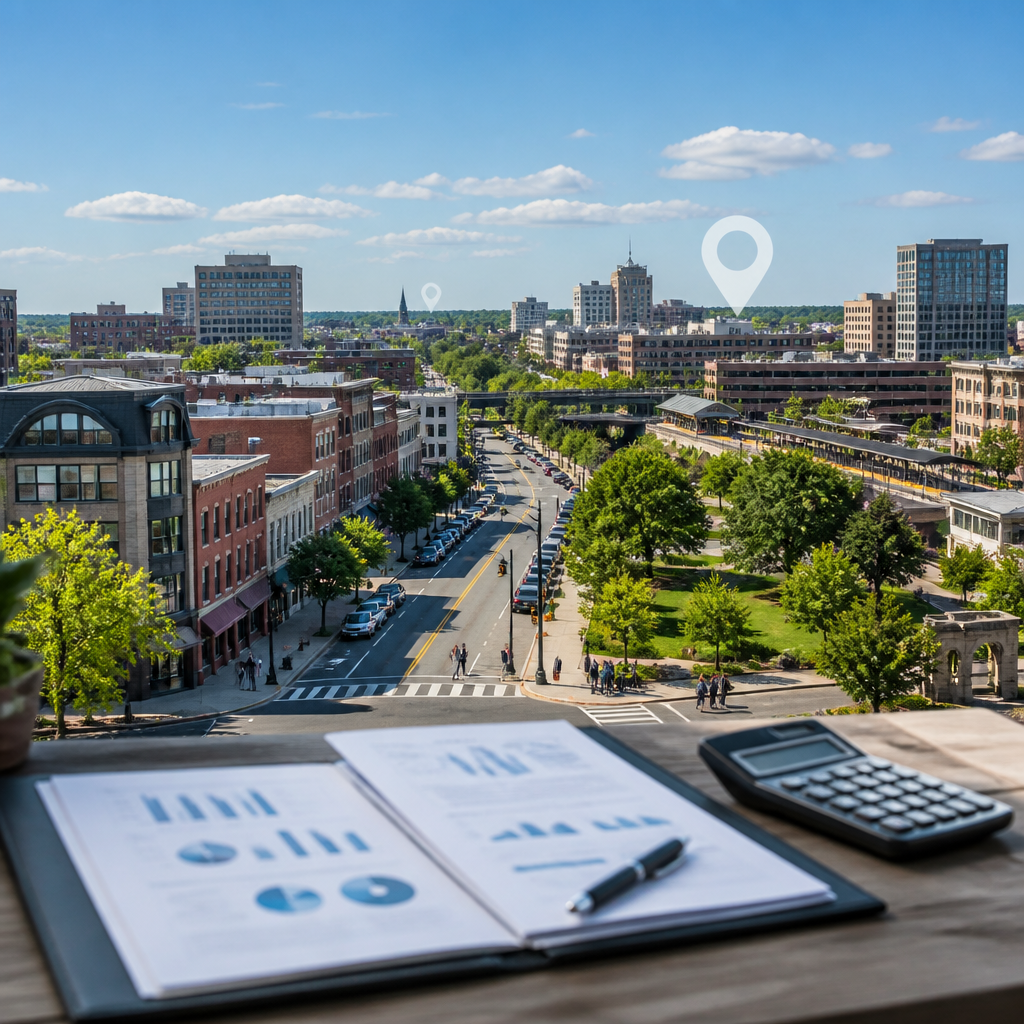
First-Time Home Buyer Tips: Navigating the Market in [Your Area]
First-Time Home Buyer Tips: Navigating the Market in [Your Area] First-time buyers focusing on buying a home in [your area] face a fast-moving and information-heavy market. According to Redfin, entry-level homes in New Brunswick often trade between $350,000 and $450,000 as of early 2026, depending o

Luxury Commercial Properties: Opportunities in [Your Area] for 2026
Luxury Commercial Properties: Opportunities in [Your Area] for 2026 Luxury commercial properties [your area] are entering 2026 with tightening supply and rising expectations from institutional tenants. According to LoopNet, premium Class A listings around downtown New Brunswick often quote asking re